Tasis and five-party mechanism agree on delegation visit to Nyala
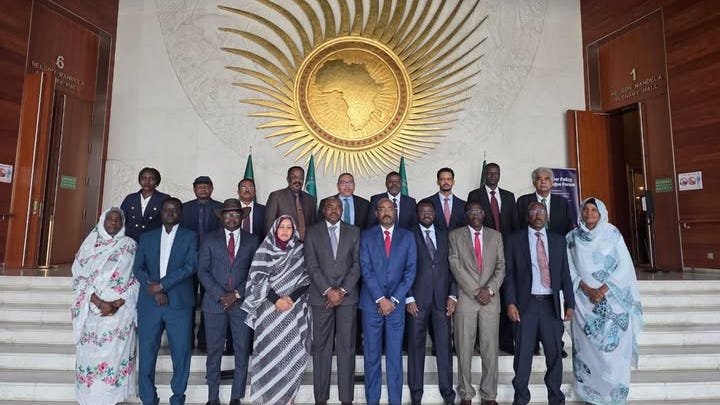
The Sudan Founding Alliance («Tasis») has announced that it agreed with the Five-Party Mechanism that a delegation from the mechanism would visit the city of Nyala, capital of South Darfur state, to meet the alliance's leaders and see conditions in the areas under its control. This followed a meeting held on Wednesday 25 November 2026 at the headquarters of the African Union Commission in Addis Ababa, which was chaired by the alliance's delegation head, Al-Taher Hajar. The Five-Party Mechanism comprises the United Nations, the African Union, the European Union, the League of Arab States and IGAD.
The alliance's spokesman, Ahmed Tagad Lisan, said the two sides agreed on the importance of moving the political process forward and preparing the procedures that would enable the parties to take part effectively and constructively. He added that the delegation had warned the mechanism that contradictory statements and positions among its members weakened its cohesion and its ability to manage a successful political process, and that it had stressed the need for the mechanism to clarify its position on the statement of the Quartet issued on 12 September 2025, which the alliance considers an acceptable roadmap. Lisan said the mechanism acknowledged the importance of the issues raised by the delegation and affirmed the need to address them.
Hajar said the alliance had raised six issues, including the nature of the mechanism's role and whether it is a mediator or a facilitator, the positions of the chairperson of the African Union Commission, the head of the African Union office in Sudan and the League of Arab States, the mechanism's interference in forming the alliance's delegation and setting the meeting's agenda, and its position on the Quartet statement. In his opening speech he criticised the mechanism's refusal to recognise any parallel government, and said the authority in Khartoum was illegitimate. After the meetings, he said the alliance's observations did not mean objection to the principle of peace, and that some parties within the mechanism were playing "negative roles" that raise questions about its commitment to neutrality. He affirmed the alliance's commitment to a voluntarily united Sudan.
Sudan Tribune quoted sources in the alliance as saying the meetings saw sharp differences and lengthy discussions, focused on the positions of parties within the mechanism towards the authority in Khartoum.
For his part, UN Secretary-General's spokesman Stéphane Dujarric said the Secretary-General's Personal Envoy for Sudan, Pekka Haavisto, took part in the consultations, and that they provided an opportunity to address the alliance's concerns and clarify its questions about the deterioration of the security and humanitarian situation, the need to intensify efforts to end the war, and the encouragement of an inclusive dialogue led by Sudanese.
Tasis is the alliance that runs the RSF-aligned Tasis government, and Sudan Tribune reported that the RSF commander, Mohamed Hamdan "Hemedti", heads its presidential council. The bodies that make up the mechanism had previously announced that they do not recognise this government, and said the step threatens to divide Sudan.